NIOS is an Adaptable Mode of Learning
Education does not always fit neatly into a fixed timetable. Some students learn while preparing for competitive examinations, some balance academics with sports or creative pursuits, while others need another opportunity after leaving conventional school.

For such learners, following the traditional classroom model may not always be the most practical option. This is where the National Institute of Open Schooling (NIOS) provides an alternative.
NIOS is India’s national open-schooling system, offering education through an open and distance learning model. Its programmes are designed to give learners greater control over subjects, study schedules, and examination opportunities.
The organisation provides academic courses at the secondary and senior secondary levels along with vocational and other programmes.
The importance of this approach is becoming more apparent as students increasingly look for education models that can accommodate different ambitions, circumstances and learning speeds.
Trending: IIM Bangalore UG Admissions: NIOS Mathematics Qualification Accepted
What Makes NIOS Different From Conventional Schooling?
The biggest distinction is not that NIOS eliminates academic requirements. Instead, it changes how learners can meet them.
In a conventional school, students generally follow a common timetable, attend classes on predetermined days and appear for examinations according to the school’s academic calendar. Open schooling gives learners more room to organise their studies around their individual circumstances.
NIOS supports self-learning through specially prepared study material, while academic assistance is also available through study centres and other learning support mechanisms.
Its system includes features such as Tutor Marked Assignments, Personal Contact Programmes and examination options designed to provide greater flexibility.
This can be particularly useful for learners who cannot easily fit into a conventional school routine.
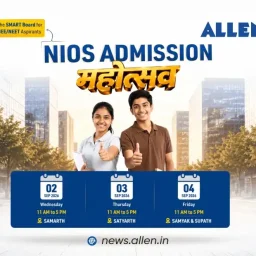
Trending: NIOS Admission Mahotsava Begins at ALLEN
Choice of Subjects Can Matter More Than Students Realise
One of the strengths of open schooling is the opportunity to make academic choices according to individual requirements.
NIOS allows learners at the secondary and senior secondary levels to select subjects from the available scheme rather than necessarily following the exact combinations found in every traditional school. It also provides opportunities to combine academic education with vocational subjects. That flexibility can be useful for students who already have a clear idea about their interests.
For example, a learner interested in technology, business, design, sports or another specialised area may need time outside school hours to develop those skills. A flexible academic structure can make it easier to balance these priorities without abandoning formal education.
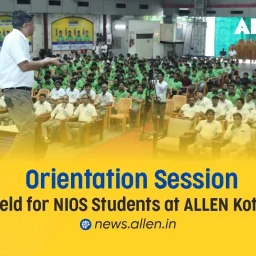
Trending: Orientation Session Held for NIOS Board Students at ALLEN
A Useful Option for Students Who Need a Different Pace
Not every learner progresses at the same speed.
Some students may need additional time to understand particular subjects, while others may be able to prepare for certain papers more quickly. NIOS has provisions that allow learners to accumulate credits and provides multiple opportunities to complete examinations during the validity period of admission.
According to NIOS, learners can receive up to nine chances to appear in public examinations over five years, subject to the applicable rules. The system also includes an On-Demand Examination facility at the secondary and senior secondary levels. This does not mean that academic standards disappear. Students still have to meet the prescribed requirements. The difference is that the route towards certification can be more adaptable.
Who Can Benefit From NIOS?
NIOS is not limited to one particular type of student.
Its open-schooling model can be relevant to learners who:
- Have discontinued formal schooling and want to continue their education
- Need flexibility because of sporting or artistic commitments
- Are preparing for competitive examinations alongside school education
- Want to improve their academic performance
- Need an alternative to a conventional school timetable
- Wish to combine academic studies with vocational learning
- Prefer independent or self-paced study
- Face geographical or other practical barriers to regular schooling
NIOS also operates an Open Basic Education programme intended for different groups of learners, including school dropouts and other out-of-school learners.
Trending: Orientation Session Held for NIOS Board Students at ALLEN
NIOS Is More Than Just a Second Chance
Open schooling is sometimes viewed only as an option for students who have struggled in conventional schools. That perception is increasingly narrow.
A flexible education system can serve students with very different goals.
Consider a student who is training seriously for a national-level sport. Attending a conventional school for several hours every day may make it difficult to manage intensive training. Another learner may be pursuing music or performing arts and require substantial time for practice. Someone else may have family responsibilities or employment commitments.
For such learners, the question is not whether education is important. The question is whether the education system can accommodate the learner’s circumstances.
That is one of the areas where NIOS can provide an alternative route.
Trending: NIOS Class 12 Result 2026
Flexible Does Not Mean Effort-Free
The word “flexible” should not be confused with “easy.”
Open schooling requires a considerable degree of self-discipline. Students have greater control over their schedules, but that also means they must take responsibility for planning their preparation.
Without a regular classroom routine, learners may need to create their own study timetable, monitor their progress and seek academic support when required.
This makes self-management an important part of the NIOS experience.
Students who require constant classroom supervision may find independent learning challenging. On the other hand, learners who are comfortable organising their own time can benefit considerably from the freedom the system provides.
Trending: NIOS Class 10 Result 2026
Digital Learning Is Expanding the Possibilities
The changing education environment is also creating new opportunities for open-school learners.
NIOS has developed a Virtual Open School platform that includes live and recorded classes, assignments, assessments and digital learning resources. The platform is presented as an optional facility for NIOS learners.
Digital resources can complement printed study material and support learners who want additional explanations or structured online instruction.
However, technology should be viewed as a support rather than a replacement for disciplined study. Access to digital content is useful only when students use it consistently and purposefully.
Trending: Rajasthan NEET Counselling: NIOS Students Eligible, Class 11 Marksheet Not Mandatory
NIOS and Vocational Education
Academic qualifications are only one part of a student’s future.
Employability increasingly depends on practical knowledge, technical abilities and industry-relevant skills. NIOS therefore also provides vocational education programmes alongside its academic offerings.
This creates an opportunity for learners to think beyond the conventional academic route.
A student does not necessarily have to choose between continuing school education and developing practical skills. Depending on the programme and eligibility requirements, vocational learning can become part of a broader educational plan.
What About NIOS Admission?
NIOS has moved its academic admission process online. Students can register directly through the NIOS system or seek assistance from study centres, regional centres and Common Service Centres.
Eligibility depends on the course being selected. For example, NIOS states that applicants for the Secondary Course generally need to have passed Class VIII and meet the prescribed age requirement, with certain alternative eligibility provisions also available.
Because admission rules, dates, fees and examination schedules can change, prospective students should always verify the latest information through official NIOS notifications before registering.
Choosing NIOS: What Students and Parents Should Consider
NIOS can be a valuable option, but it should not be selected simply because it appears more flexible.
Before making a decision, students and parents should consider:
Learning habits: Can the student study independently and maintain a consistent routine?
Career plans: Does the selected subject combination support the student’s future academic or professional goals?
Support requirements: Will the learner need regular guidance from teachers or a study centre?
Examination planning: Does the student understand the available examination routes and deadlines?
Practical commitments: Will the flexibility genuinely help the student manage sports, work, family responsibilities or other priorities?
A good educational pathway is one that matches the learner—not merely one that is considered conventional.
The Larger Lesson for Indian Education
The growing interest in flexible schooling points to a broader question: should every student have to follow exactly the same educational journey?
Students differ in ability, interests, responsibilities, ambitions and circumstances. A single model cannot always serve all of them equally well.
NIOS does not replace conventional schooling, nor is it necessarily the right choice for everyone. Its value lies in providing another recognised pathway for learners who need greater control over how they pursue school education.
The future of education may not be about choosing between traditional and open schooling. Instead, it may involve creating enough legitimate pathways for different kinds of learners to succeed.
For students who need flexibility without giving up formal school qualifications, NIOS can offer a practical and structured alternative—provided they approach it with clear goals, careful planning and the discipline required for independent learning.
Final Thoughts
The real strength of NIOS lies in the choices it can provide.
Students can explore different subjects, manage their preparation over a longer period, access learning support and use available examination opportunities according to the applicable rules. At the same time, they must take greater ownership of their education.
As India’s education landscape continues to evolve, flexible models such as NIOS may become increasingly important for learners whose ambitions or circumstances do not fit neatly into a conventional classroom schedule.
For the right student, open schooling is not a shortcut. It can be a different route to the same destination: meaningful education and a stronger foundation for the future.
Know More About NIOS Board