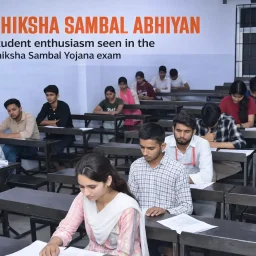
Government Forms High-Powered Task Force for NTA Exam Reforms
The Government of India has initiated a major exercise to strengthen the country’s public examination system. Union Education Minister Pralhad Joshi announced on August 29 that a high-powered task force has been constituted to examine the existing system and recommend reforms in the conduct, security and governance of public examinations conducted by the National Testing Agency (NTA). The move comes amid concerns over various issues faced by candidates in major competitive examinations in recent years.
Students and Stakeholders Can Share Their Suggestions
The government has invited students, candidates, parents, teachers, academic institutions, examination bodies, experts, professionals and members of civil society to submit their feedback on the examination system.
The objective is to understand the challenges faced by different stakeholders and identify practical measures that can make examinations more transparent, secure, efficient and student-friendly.
Feedback Sought on Examination Conduct and Logistics
According to the initiative, stakeholders can share suggestions on several aspects of the examination process. These include the way examinations are conducted, arrangements at examination centres, logistics, examination patterns, security measures and the use of technology.
Students and teachers who have experienced difficulties during examinations can particularly highlight specific problems and suggest solutions that could improve the overall examination experience.
NTA Conducts Several Major National-Level Examinations
The National Testing Agency conducts some of India’s most important entrance examinations, including JEE Main and NEET UG. Millions of students appear for these examinations every year, making the accuracy, security and fairness of the process extremely important.
Any major error, technical problem or disruption can have a significant impact on candidates because their examination results determine admission opportunities and future academic choices.
Paper Leak Concerns Raise Questions Over Examination Security
Paper leaks have emerged as one of the major concerns surrounding competitive examinations in India. Whenever allegations of question paper leaks arise, students who have prepared for months face uncertainty and anxiety.
Strengthening the security system from question paper preparation and printing to transportation, storage and examination-centre management is therefore expected to remain an important part of the proposed reforms.
Technical Glitches Can Affect Students During Exams
Technical problems during computer-based examinations can also create difficulties for candidates. Issues related to computer systems, connectivity, biometric verification, server problems or other technical disruptions can cause stress, particularly when students are appearing for high-stakes examinations.
The feedback exercise gives candidates an opportunity to suggest stronger technical infrastructure and effective backup arrangements at examination centres.
Answer Key Discrepancies Are Another Major Concern
The preparation and publication of answer keys is another area that can be addressed through the feedback process. Candidates rely on answer keys to estimate their scores and understand their performance.
Questions, answers or answer keys that are subsequently modified can create uncertainty among students. A more transparent and clearly defined system for challenging and finalising answer keys could help reduce confusion and disputes.
JEE Main Aspirants Can Raise Examination-Related Issues
JEE Main candidates can use the feedback opportunity to highlight concerns related to examination sessions, question-paper difficulty, answer keys, technical issues and other aspects of the examination process.
Since JEE Main is conducted in multiple sessions, students may also provide suggestions on maintaining fairness and consistency across different shifts while ensuring that the evaluation process remains transparent.
NEET UG Aspirants Can Also Share Their Experiences
NEET UG is another major examination conducted by the NTA and is taken by a very large number of medical aspirants every year.
Students preparing for NEET UG can provide feedback on examination security, centre management, question paper handling, examination-day arrangements, answer keys and grievance redressal.
Their suggestions could contribute to improving the experience of future medical aspirants.
Eligibility Rules Can Also Be Discussed
Students can also raise broader policy-related concerns through the feedback mechanism. For JEE aspirants, issues surrounding eligibility requirements, including the Class 12 marks criterion, have been a recurring subject of discussion.
Candidates can use the opportunity to explain how such policies affect their preparation and admission prospects and offer suggestions for making the rules clearer and more predictable.
Examination Pattern and Evaluation Need Greater Transparency
A transparent examination pattern is important for students preparing for highly competitive tests. Candidates need clear information about the syllabus, marking scheme, number of questions, examination sessions and evaluation methodology well in advance.
Suggestions regarding these aspects can help policymakers consider reforms that provide students with greater certainty and reduce unnecessary stress during preparation.
Parents and Teachers Can Provide Valuable Feedback
The feedback initiative is not limited to students. Parents and teachers can also contribute their views based on their experiences with the examination system.
Parents can highlight concerns related to student stress, examination logistics and communication, while teachers can provide suggestions regarding examination patterns, academic requirements and the impact of examination policies on students.
Experts and Examination Bodies Can Suggest System-Level Changes
Experts, academic institutions and examination bodies can contribute to the reform process by identifying structural weaknesses in the existing system.
Their recommendations could focus on technology, question paper security, examination administration, data management, evaluation, grievance redressal and other operational areas.
Such expert feedback could help the task force develop reforms that are practical and scalable.
Government Opens Opportunity for Direct Public Participation
The decision to invite feedback from a wide range of stakeholders gives the public an opportunity to participate in discussions about India’s examination system.
Instead of limiting the reform process to government agencies and examination authorities, the initiative seeks views from people who directly experience the examination system.
This could help policymakers better understand problems that may not always be visible at the administrative level.
Feedback Can Be Submitted Through Multiple Channels
Stakeholders can submit their suggestions through the feedback mechanism announced by the government. Participants can identify themselves based on their role, including student, candidate, teacher, expert, examination body, organisation, civil society member or other stakeholder.
The initiative also provides channels such as email and WhatsApp for sharing feedback, giving participants multiple ways to communicate their concerns and recommendations.
Students Should Give Specific and Practical Suggestions
Candidates planning to submit feedback should focus on specific problems and possible solutions. Instead of simply stating that an examination system needs improvement, students can explain what went wrong, how it affected candidates and what measures could prevent similar problems in the future.
Suggestions related to paper security, technical support, examination-centre management, answer keys, grievance redressal and communication can make the feedback more meaningful.
Reform Could Help Restore Students’ Confidence
A reliable examination system is essential for maintaining students’ confidence in competitive examinations. Candidates preparing for JEE Main, NEET UG and other national-level tests invest considerable time, effort and resources in their preparation.
Ensuring that examinations are conducted fairly and securely can reduce uncertainty and strengthen confidence in the admission process.
High-Powered Task Force to Examine Stakeholder Concerns
The high-powered task force will examine the various aspects of public examinations and recommend measures for improvement. The feedback received from students, parents, teachers, experts, institutions and other stakeholders can provide valuable inputs for this exercise.
The larger objective is to create an examination framework that is secure, transparent, technologically robust and capable of handling examinations involving millions of candidates.
NTA Exam Reform Initiative: An Important Opportunity for Students
The government’s decision to seek public feedback on NTA examinations is an important opportunity for students and other stakeholders to put forward their concerns. Issues such as paper leaks, technical glitches, examination logistics, answer key discrepancies, evaluation procedures and eligibility policies can all be discussed through the feedback process.
For students preparing for JEE Main, NEET UG and other competitive examinations, participating in the exercise can be a meaningful way to contribute to improving India’s examination system.
NTA Exam Reforms 2026: Key Takeaway
The proposed reforms are aimed at making public examinations more secure, transparent and efficient. With students and other stakeholders being invited to share their experiences and suggestions, the initiative could provide policymakers with valuable ground-level insights.
The success of any examination reform ultimately depends on how effectively genuine concerns are identified and converted into practical changes that ensure a fair examination environment for every candidate.